
The Future of Subscriptions in the USA: Where Billing Is Going (and How to Stay Ahead)
UPDATE 09/17/2026
2/15/20266 min read

The Future of Subscriptions in the USA: Where Billing Is Going (and How to Stay Ahead)
Take a second to scroll through your business bank statement or your personal credit card log. What do you see? Netflix, Spotify, Microsoft 365, Adobe Creative Cloud, Amazon Prime, your favorite SaaS marketing analytics dashboard, and maybe a weekly meal-prep box or a premium coffee delivery beans service.
We don’t buy assets anymore; we rent access.
The Subscription Economy has permanently captured the American consumer and corporate wallet. But behind the scenes of your favorite automated monthly charges, a quiet, high-stakes infrastructure war is unfolding. The days of simply setting up a static "Subscribe and Save" button or launching a generic $9.99 monthly tier and watching the passive revenue roll in are officially dead.
In 2026, subscription businesses in the United States are facing a volatile cocktail of massive structural shifts: aggressive Federal Trade Commission (FTC) enforcement, a chaotic patchwork of strict state laws, a sudden rise in involuntary churn, and an unyielding consumer demand for hyper-flexible, usage-based pricing models.
If you are a startup founder, an enterprise executive, or an e-commerce brand manager, you need to understand that how you bill your customers is becoming just as critical as what you sell them. Let’s dive into a massive, strategic breakdown of where subscription billing is heading in the USA and exactly what you must do to stay ahead of the curve.
1. The Patchwork Regulatory Landscape: Navigating the FTC and State Laws
Let's address the massive elephant in the room first: legal compliance. For years, unscrupulous digital brands relied on "dark patterns"—sneaky user interface designs that made it incredibly easy to sign up for a free trial but required a labyrinth of phone calls, hidden email forms, or certified mail to cancel.
The federal government and state legislatures have officially run out of patience.
The Evolution of the FTC "Click-to-Cancel" Mandate
The Federal Trade Commission initially finalized its landmark "Click-to-Cancel" rule to establish a simple baseline: canceling a subscription must be at least as easy as signing up for it. However, after the rule faced procedural pushbacks and a temporary vacatur by the Eighth Circuit Court of Appeals, the regulatory environment became even more complex.
As detailed in the comprehensive JDSupra Report on FTC Subscription Billing Risks, the FTC has completely bypassed procedural hurdles by doubling down on enforcement via Section 5 of the FTC Act and the Restore Online Shoppers’ Confidence Act (ROSCA). The agency is actively securing multi-million dollar settlements against companies using deceptive automatic renewal features.
The Stricter State-Level Patchwork
While the federal rule undergoes continuous refinement, roughly 30 US states have enacted their own hyper-strict automatic renewal laws (ARLs). States like California (AB 390), New York, and Delaware have instituted frameworks that are far more aggressive than federal guidelines.
To stay ahead, your billing stack must natively automate three core regulatory requirements:
The Pre-Renewal Warning: You must send an explicit, conspicuous email notification 15 to 30 days before a annual subscription automatically renews, detailing the price, terms, and a direct cancellation link.
Unambiguous Affirmative Consent: Gone are the days of pre-checked boxes at checkout. Users must explicitly check a separate, un-filled box agreeing to recurring charges.
The Immediate Cancel Button: If a user signed up online with a single click, they must be allowed to terminate their subscription completely online in a self-service dashboard with the exact same number of clicks.
2. Pricing Models Transformation: The Unstoppable Rise of Hybrid Billing
The flat-rate recurring billing model is bleeding efficiency. Consumers and enterprise buyers are suffering from severe subscription fatigue, leading to a massive backlash against paying flat monthly fees for software or services they barely use.
The market is shifting decisively toward Usage-Based Pricing (UBP) and hybrid monetization frameworks.
According to enterprise infrastructure data found in the Renub Subscription Billing Management Market Analysis, the United States is leading global adoption of cloud-native, meter-based financial technologies. Companies are increasingly integrating AI-enabled pricing engines to dynamically adjust billing based on actual value metrics rather than seat counts.
The Three Dominant Billing Frameworks of the Future:
The Pure Usage Model (Pay-As-You-Go): Popularized by cloud giants like AWS and Snowflake. The customer pays zero upfront fees; billing engines track consumption metrics (gigabytes used, API calls made, emails sent) and generate an invoice retroactively.
The Tiered Consumption Model: Customers buy a predictable monthly baseline block of access (e.g., up to 10,000 user views). If they exceed that limit, the billing system seamlessly charges overage fees per unit.
The Dynamic AI Hybrid Model: The hottest trend in 2026. Subscriptions that scale prices algorithmically based on the tangible ROI or computational processing power delivered to the user during that specific billing cycle.
3. Generational Shifting: Adapting to Gen Z and Alpha Consumption Habits
Understanding the demographic shifts in payment behavior is vital for capturing long-term recurring market share. The way a Baby Boomer interacts with a subscription is fundamentally different from how Gen Z manages their digital wallet.
Macroeconomic consumer research compiled in the Bank of America Consumer Subscription Spending Report indicates that overall subscription spending rose 7.7% year-over-year. However, the data highlights a staggering divergence: Gen Z posted a massive 14% year-over-year growth rate in subscription velocity.
While Gen X and older Millennials remain the largest cash spenders by total volume, younger generations are reshaping consumer expectations:
Micro-Subscriptions and Pausing Over Canceling: Gen Z treats subscriptions like a fluid valve. If they lack funds or interest for a month, they expect an instant "Pause Subscription for 30 Days" button rather than a binary cancel option. If your platform doesn't offer a pause feature, they will issue a hard cancellation, and winning them back will cost triple the initial customer acquisition cost (CAC).
The "Replenishment" Expectation: For physical goods e-commerce, the generic monthly box is out. Consumers expect hyper-intelligent prediction models. As showcased in the benchmark Recharge Subscription Trend Report 2026, top-performing e-commerce brands are moving away from fixed delivery dates toward event-driven data, letting users shift delivery cadences seamlessly via text message integrations.
4. Fighting Involuntary Churn with Advanced AI Retention Infrastructure
When building a recurring revenue business, most operators focus entirely on voluntary churn (customers actively choosing to leave). But there is a silent killer draining your bottom line: involuntary churn.
Involuntary churn occurs when a loyal, happy subscriber’s payment fails in the background due to an expired credit card, a soft bank decline, insufficient funds, or a false fraud flag triggered by legacy payment processors. In the United States, involuntary churn typically accounts for 20% to 40% of a company’s total subscriber loss.
To stay ahead, enterprise brands are completely overhauling their dunning management and mechanical processing layer:
Smart Retries Powered by Machine Learning: Do not retry a declined credit card every 24 hours blindly. Modern billing systems utilize predictive AI to analyze optimal windows, retrying a card at 8:00 AM on a Friday (right after typical payroll deposits hit) to dramatically increase success rates.
Real-Time Card Account Updaters (CAU): Your billing infrastructure must maintain direct API integrations with Visa, Mastercard, and American Express. When a customer's physical card expires or gets replaced due to a data breach, the network must automatically sync the new expiration date and card token to your system without interrupting the recurring billing loop.
5. Payment Preferences Overhaul: Moving Beyond the Credit Card
Credit cards have dominated American recurring billing for decades, but their throne is officially under siege. High interchange fees (often reaching 2.5% to 3.5% per transaction) and high failure rates are driving subscription brands toward alternative payment methods (APMs).
The Real-Time Payment (RTP) and FedNow Disruption
The launch and expansion of open-banking rails and instant payment systems like FedNow are revolutionizing subscription billing. Brands are heavily incentivizing consumers to link their bank accounts directly using secure verification layers. By utilizing automated clearing house networks or real-time account-to-account payments, companies completely bypass traditional credit card processing rails, slashing transaction costs by up to 80%.
Digital Wallets and Embedded BNPL
Apple Pay, Google Pay, and PayPal are no longer optional conversion features; they are mandatory core billing components. Digital wallets offer built-in biometric security that virtually eliminates friendly fraud chargebacks. Furthermore, the integration of Buy Now, Pay Later (BNPL) schedules into annual subscription tiers allows consumers to commit to an annual contract while splitting the financial burden into smaller bi-weekly payments.
Future Blueprint: Strategic Subscription Billing Frameworks
This extensive comparison matrix contrasts legacy subscription billing practices against the advanced, compliant, and high-retention infrastructure required to scale successfully in the modern US market.
This article shows where subscriptions are going.
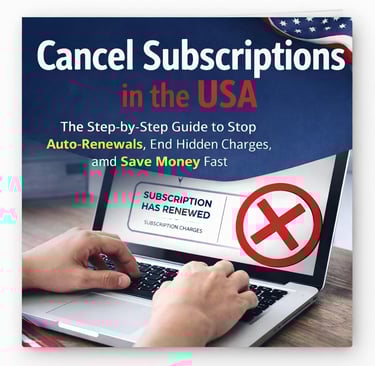
The eBook Cancel Subscriptions in the USA gives you the complete control framework, including:
The ultimate exit checklist
Dark-pattern-resistant scripts
Platform & bank escalation steps
Monitoring & prevention system
Long-term subscription governance
👉 Download the full guide and stay ahead of subscription billing—today and tomorrow.https://cancelsubscriptionsusa.com/cancel-subscriptions-usa
Contact
support@cancelsubscriptionsusa.com
© 2026. All rights reserved.