
Still Being Charged After Canceling a Subscription? Here’s Exactly What to Do
Blog post description.
1/2/20264 min read
Still Being Charged After Canceling a Subscription? Here’s Exactly What to Do
Canceling a subscription and still seeing a charge on your bank statement is one of the most frustrating experiences in the U.S. subscription economy.
You did everything right.
You clicked cancel.
You received confirmation.
And yet, the charge is still there.
This situation is more common than most people realize—and it doesn’t mean you failed. It means you’ve entered the post-cancellation phase, where knowing the correct steps makes the difference between quick resolution and months of wasted money.
This guide explains exactly what to do when you’re still being charged after canceling a subscription in the USA, step by step, without panic, and without costly mistakes.
First: Don’t Assume It’s a Mistake (Yet)
Before reacting, understand this important distinction:
Not every post-cancellation charge is wrong.
Sometimes:
You canceled after the billing cutoff
The charge was already pending
The billing period hadn’t ended yet
Your job is to determine which type of charge this is before escalating.
Step 1: Check the Cancellation Date vs the Charge Date
This is the single most important comparison.
Ask yourself:
When did I cancel?
When was the charge processed?
What was the renewal date?
If the charge happened before or on the renewal date, it may be valid.
If the charge happened after a confirmed cancellation, it may be unauthorized.
Dates decide everything.
Step 2: Confirm That the Cancellation Was Actually Complete
Many “still being charged” cases happen because cancellation was incomplete.
Re-check:
Account status (“Canceled” or “Expires on”)
Confirmation email
Reference or ticket number
All active plans or add-ons
Some services have multiple subscriptions under one account. Canceling one does not cancel them all.
Step 3: Look for Pending or Processing Charges
Banks often show charges before they fully post.
If the charge is:
Marked as “pending”
Initiated before cancellation
Reversed automatically later
It may disappear without action.
Wait until the charge fully posts before escalating.
Step 4: Gather Your Proof (This Is Critical)
If the charge is posted and appears incorrect, gather evidence immediately.
You should have:
Cancellation confirmation email or screenshot
Date and time of cancellation
Billing statement showing the charge
Any previous communication with the company
Proof transforms frustration into leverage.
Step 5: Contact the Company in Writing (Not by Phone)
Your first escalation should always be written.
Send a clear message:
State that you canceled
Reference the confirmation
Point out the charge
Request reversal and confirmation that billing has stopped
Written communication creates a paper trail that phone calls cannot.
Step 6: What to Say (And What Not to Say)
Say:
“I canceled on [date].”
“I have confirmation.”
“I was charged again on [date].”
“Please reverse this charge and confirm cancellation.”
Avoid:
Long emotional explanations
Threats
Accusations
Facts win. Emotion delays.
Step 7: Set a Clear Deadline
If the company doesn’t respond:
Follow up after 3–5 business days
Set a deadline for response
State that further charges will be considered unauthorized
Deadlines signal seriousness.
Step 8: When Continued Charges Become Unauthorized
A charge becomes unauthorized when:
You canceled correctly
You have proof
Billing continues anyway
At this point, you are no longer negotiating customer service—you are enforcing billing rules.
This distinction matters legally and financially.
Step 9: Contact Your Bank or Card Provider
If the company doesn’t resolve the issue quickly, contact your bank.
Explain calmly:
When you canceled
When you were charged
That you have proof
Banks deal with this situation every day. Prepared consumers are taken seriously.
Step 10: Dispute vs Chargeback — What’s the Difference?
A dispute:
Opens an investigation
Temporarily credits funds
Requests merchant response
A chargeback:
Is a formal reversal
Costs the merchant fees
Forces proof of authorization
Your bank will guide you on which applies.
Step 11: Why Card Replacement Is Not the First Move
Many people immediately cancel or replace their card.
This can:
Complicate disputes
Delay resolution
Still allow charges through account-based billing
Always dispute first. Replace cards only if advised by your bank.
Step 12: Monitor Future Statements Carefully
After resolution:
Watch the next 1–2 billing cycles
Ensure no new charges appear
Save final confirmations
Some errors repeat if monitoring stops too soon.
Common Reasons Charges Continue (Even After Cancellation)
Understanding these helps prevent repeat issues:
Multiple subscriptions under one account
Add-ons not canceled
Cancellation after cutoff
Platform vs website confusion
System processing delays
Awareness prevents recurrence.
Why Giving Up Is What Companies Hope For
Most companies don’t rely on winning disputes.
They rely on customers giving up.
The amounts feel small.
The process feels annoying.
Prepared consumers don’t give up—and they usually win.
How This Situation Becomes Easy the Second Time
The first post-cancellation charge feels stressful.
The second one feels procedural.
Once you’ve done this successfully:
You know the steps
You act faster
You stress less
Skill compounds.
Turning a Problem Into Permanent Control
Every successful resolution teaches you:
Where billing really lives
How companies respond
How banks protect you
This knowledge pays off repeatedly.
Why This Happens So Often in the USA
The U.S. subscription economy is massive, fragmented, and automated.
Errors happen.
Delays happen.
What matters is knowing how to respond—not assuming you’re powerless.
From Frustration to Confidence
Being charged after cancellation feels personal—but it’s not.
It’s a system issue.
Systems respond to evidence, process, and escalation.
Once you treat it that way, resolution becomes routine.
Want the Full “Never Get Charged Again” System?
This article shows exactly what to do when you’re still charged after canceling.
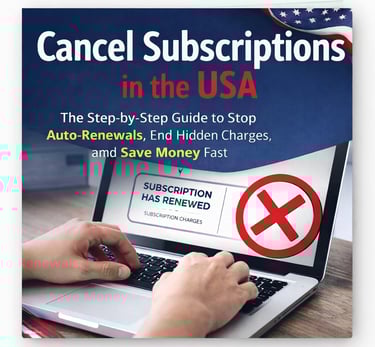
The eBook Cancel Subscriptions in the USA gives you the complete system, including:
Copy-paste escalation scripts
Free trial safety method
Bank dispute and chargeback playbook
One-page master checklist
Prevention systems so this doesn’t happen again
👉 Download the full guide and make unwanted charges a thing of the past—starting today.https://cancelsubscriptionsusa.com/cancel-subscriptions-usa
Contact
support@cancelsubscriptionsusa.com
© 2026. All rights reserved.