
Advanced Subscription Retention Tactics Companies Use (And How to Beat Them)
Blog post description.
1/24/202619 min read
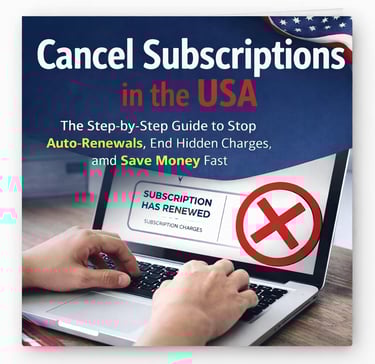
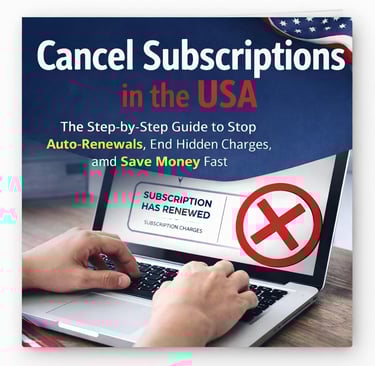
Advanced Subscription Retention Tactics Companies Use (And How to Beat Them)
You didn’t agree to keep paying forever.
You signed up for a free trial. Or a discounted first month. Or a “cancel anytime” service that promised flexibility and control. And yet—months or years later—you’re still being charged. Sometimes you don’t even remember why. Sometimes you’re embarrassed to admit you don’t use it. Sometimes you tried to cancel and gave up halfway through.
That’s not an accident.
Modern subscription businesses are engineered—carefully, deliberately, and relentlessly—to keep you paying for as long as possible. Not by delivering more value (at least not primarily), but by using advanced psychological, behavioral, technical, and legal retention tactics designed to exploit human behavior, friction, and inertia.
This article exposes those tactics in full detail.
Not the surface-level advice you’ve seen a thousand times. Not “set a reminder” or “check your bank statements.” This is a deep, no-shortcuts breakdown of how subscription companies actually retain users, why these strategies work so well, and—most importantly—exactly how you can beat them.
If you’ve ever felt trapped, manipulated, or simply exhausted by the process of canceling subscriptions in the United States, this guide is for you.
Why Subscription Retention Is a Multi-Billion-Dollar Science
Subscription revenue is predictable, recurring, and scalable. That makes it incredibly valuable. A customer who pays $15 per month for five years is worth far more than a one-time $200 purchase—not just in revenue, but in investor valuation, cash flow forecasting, and long-term leverage.
Because of that, companies don’t “hope” you stay subscribed.
They engineer it.
Entire teams exist solely to optimize retention. Data scientists analyze churn patterns. Behavioral psychologists advise on UI flows. Legal teams design cancellation terms that are technically compliant while remaining practically obstructive. Product managers A/B test everything from button color to wording tone to email timing.
Retention is not a side effect. It is the product.
And once you understand that, everything starts to make sense.
The Psychological Foundation: Why Humans Don’t Cancel
Before diving into specific tactics, you need to understand the psychological vulnerabilities these systems exploit. Subscription companies aren’t guessing—they’re targeting predictable human behaviors that most people share.
Inertia and Status Quo Bias
Humans strongly prefer doing nothing over doing something—even when doing something is clearly beneficial.
Canceling requires action:
Logging in
Finding the account page
Navigating settings
Making a decision
Confirming it
Possibly dealing with guilt or doubt
Doing nothing requires… nothing.
Every month that passes without cancellation increases the likelihood you’ll never cancel at all.
Loss Aversion
People fear losing access more than they value saving money.
Even if you rarely use the service, the idea of not having it feels worse than paying for it “just in case.” Companies amplify this fear intentionally by framing cancellation as a loss rather than a gain.
“You’ll lose access to your data.”
“You’ll miss out on exclusive features.”
“Your progress will be deleted.”
Loss aversion is one of the strongest cognitive biases known—and subscriptions lean on it heavily.
Decision Fatigue
The average adult makes thousands of decisions per day. By the time someone thinks about canceling a subscription, their mental energy is often depleted.
That’s why cancellation flows are intentionally long, confusing, or emotionally loaded. The goal is not to stop you outright—it’s to wear you down until you postpone the decision.
“I’ll do it later” is retention gold.
Tactic #1: Friction-Based Cancellation (The Maze)
One of the most common—and effective—retention strategies is intentional friction.
Canceling is technically possible, but practically unpleasant.
This includes:
Hiding the cancellation option deep inside account settings
Renaming it with vague language like “Manage Plan” or “Billing Preferences”
Requiring multiple confirmation screens
Asking repeated “Are you sure?” questions
Forcing re-authentication
Timing out sessions mid-process
Each additional step increases drop-off.
Companies track exactly how many users abandon the cancellation process at each stage—and they optimize accordingly.
How to Beat It
The key is pre-commitment and persistence.
Before you even log in:
Decide that you will cancel today
Set aside uninterrupted time
Open a text editor and write: “I am canceling this subscription now”
Sounds silly—but it dramatically increases follow-through.
If the site logs you out, reloads, or tries to confuse you, don’t engage emotionally. Treat it like a checklist. Click. Confirm. Proceed.
You are not being rude. You are not making a mistake. You are reclaiming control.
Tactic #2: Emotional Manipulation Screens (“We’ll Miss You”)
At some point in the cancellation flow, you’ll encounter an emotionally charged message.
It might say:
“We’re sad to see you go”
“You’ve been with us for X months”
“Your journey doesn’t have to end”
“Are you sure you want to give this up?”
Some screens include photos of smiling employees. Others show friendly illustrations. Some use conversational language designed to trigger guilt or doubt.
This is not accidental. It’s emotional leverage.
Humans are social creatures. We’re wired to avoid causing disappointment—even to a faceless company.
How to Beat It
Remember one thing:
Companies do not have feelings. Systems do not feel sadness. Screens are not people.
The emotional language exists solely to manipulate your behavior.
When you see it:
Do not read it closely
Do not reflect
Do not rationalize
Scroll. Click cancel. Move forward.
You owe nothing beyond what you already paid.
Tactic #3: The “Pause Instead” Trap
Many services offer to “pause” your subscription instead of canceling it.
On the surface, this seems consumer-friendly. In reality, it’s one of the most effective retention tricks ever created.
Why it works:
It delays the final decision
It keeps your payment method on file
It ensures automatic reactivation
It increases the chance you forget
Pausing feels responsible. Canceling feels final. Companies know which one you’ll choose under uncertainty.
How to Beat It
If your goal is to stop paying, never pause.
Pausing is only useful if:
You know the exact date you want to resume
You’ve already scheduled a reminder to cancel later
You trust yourself not to forget
Most people do not meet these criteria.
Cancellation is clean. Pausing is a trap.
Tactic #4: Strategic Discount Offers at the Point of Exit
Just as you’re about to cancel, the system suddenly “finds” a deal for you.
50% off for three months.
A free upgrade.
An exclusive loyalty rate.
This is not generosity—it’s calculated desperation.
Companies know you’re at the highest risk of churn at this exact moment, so they deploy incentives they would never offer upfront.
The goal is not long-term satisfaction. The goal is delay.
Once you accept the discount, inertia resets. You’re back on the hook.
How to Beat It
Ask yourself one question:
“Would I keep this subscription at full price?”
If the answer is no, then the discount is irrelevant.
Temporary savings do not justify permanent reattachment.
Click “No thanks.” Cancel anyway.
Tactic #5: Data Hostage-Taking
Some subscriptions store your data—documents, photos, projects, playlists, progress, history.
At cancellation, they warn you:
“Your data will be deleted”
“You’ll lose access immediately”
“This cannot be undone”
This creates fear and urgency.
People stay subscribed not because they value the service—but because they’re afraid of losing their data.
How to Beat It
Before canceling:
Export everything
Download files
Take screenshots
Copy notes
Save confirmations
Most services legally must provide data access tools—but they don’t advertise them.
Once your data is safe, their leverage disappears.
Tactic #6: The “Contact Support” Wall
Some companies don’t allow online cancellation at all.
Instead, they require:
Calling a phone number
Opening a support ticket
Chatting with a live agent
Explaining your reason
This is intentional human friction.
Agents are trained to:
Ask probing questions
Offer alternatives
Delay resolution
Reframe cancellation as a problem to solve
How to Beat It
Prepare a script. Use it verbatim.
“I would like to cancel my subscription effective immediately. I do not wish to pause, downgrade, or receive offers. Please confirm cancellation in writing.”
Repeat as needed.
Do not explain yourself. You do not need a reason.
Silence is power.
Tactic #7: Billing Cycle Obfuscation
Some subscriptions bill:
On odd dates
Annually instead of monthly
With unclear renewal notices
Using vague invoice descriptions
This increases the chance you miss a renewal window and get charged again.
How to Beat It
After canceling:
Screenshot the confirmation
Save the email
Check your bank statement the following cycle
Set a calendar reminder to verify no charge appears
If a charge does appear, dispute it immediately.
Time favors the company. Speed favors you.
Tactic #8: Legal Fine Print That Discourages Action
Terms like:
“Non-refundable”
“No partial refunds”
“Cancellation effective at end of billing period”
These are designed to make cancellation feel pointless.
Why cancel now if you already paid?
Because future charges matter more than sunk costs.
How to Beat It
Ignore sunk costs.
Cancel the moment you decide. Every day you wait increases loss.
You are not “wasting” the remaining time—you are stopping further damage.
The Hidden Meta-Tactic: Overwhelm
All these tactics combine into one overarching strategy:
Make cancellation feel harder than staying subscribed.
Not impossible. Just exhausting.
And most people give up.
That’s why subscription revenue is so stable—even when satisfaction is low.
The Reality: You Are Not Weak—The System Is Strong
If you’ve struggled to cancel subscriptions, it’s not because you’re careless, lazy, or bad with money.
It’s because you’re human—and the system is designed to exploit that.
Once you see the patterns, the guilt disappears. What replaces it is clarity.
And with clarity comes action.
Your Final Move: Take Back Control Now
If you’re dealing with:
Multiple active subscriptions
Confusing cancellation flows
Services that won’t let you cancel easily
Charges you don’t recognize
Endless “pause,” “discount,” or “contact support” loops
You don’t need more willpower.
You need a system.
Cancel Subscriptions USA exists for one reason: to help you identify, cancel, and permanently stop unwanted subscriptions across U.S.-based companies—fast, legally, and without stress.
No guilt. No manipulation. No endless screens.
Just results.
👉 Get Cancel Subscriptions USA now and take back control of your money, your time, and your peace of mind.
Because the longer you wait, the system wins—and you keep paying.
And that’s exactly what they’re counting on.
continue
…on.
They are counting on delay. They are counting on distraction. They are counting on the fact that life is busy, attention is fragmented, and cancellation sits permanently at the bottom of your to-do list.
So now we go deeper—because the tactics don’t stop at the obvious UI tricks. The most dangerous subscription retention strategies are the ones you don’t see at all.
Tactic #9: Behavioral Tracking and “Churn Prediction” Models
Modern subscription companies don’t wait for you to click “Cancel.”
They predict it.
Every serious subscription business in the U.S. uses churn-prediction models built on behavioral data, including:
Login frequency changes
Reduced usage time
Skipped features
Pauses in engagement
Email open rates declining
Support page visits
Billing page visits
The moment your behavior signals “possible cancellation risk,” the system reacts automatically.
You might suddenly receive:
A “How are we doing?” email
A usage reminder notification
A feature announcement “just for you”
A discount offer before you even try to cancel
This is not coincidence. It’s algorithmic intervention.
Why This Works
Humans are extremely sensitive to timing. When a message arrives right as doubt forms, it feels personal, intuitive, and helpful—even when it’s automated.
The company isn’t responding to your needs. It’s responding to statistical probability.
How to Beat It
The moment you feel the urge to cancel, act immediately.
Do not:
Open promotional emails
Click feature announcements
“Give it another week”
Re-engage with the product
Every interaction feeds the model and resets your churn score.
Silence + cancellation is the only move that doesn’t give the system more data to use against you.
Tactic #10: The “Foundational Service” Illusion
Some subscriptions position themselves as infrastructure, not optional services.
Examples include:
Cloud storage
Password managers
Identity monitoring
Financial tracking tools
Security software
“All-in-one” productivity suites
The messaging is subtle but powerful:
“If you cancel this, everything else breaks.”
Even if that’s not true, the fear alone keeps people subscribed for years.
How This Is Engineered
Interdependency between features
Central dashboards tied to multiple workflows
Alerts framed as protection (“We’re watching for threats”)
Language emphasizing safety, continuity, and stability
Canceling feels reckless—even when the service adds little real value.
How to Beat It
Ask one brutally honest question:
“If this service disappeared tomorrow, what would actually happen?”
Most of the time, the answer is:
You’d switch providers
You’d use a free alternative
Nothing significant would change
That realization breaks the illusion.
You are not dismantling your life. You are removing a monthly charge.
Tactic #11: Auto-Renewal + Silent Continuity
Auto-renewal is legal. It’s also one of the most profitable mechanisms in modern commerce.
Once enabled:
No reminder is sent
No confirmation is required
The charge just happens
Some companies send renewal notices—but bury them in promotional emails or send them at strategic times (late Friday nights, holidays, end of billing cycles).
Why This Works
People don’t review bank statements line by line. They recognize patterns.
If a charge looks “normal,” it blends into the background—even if it shouldn’t exist anymore.
How to Beat It
Adopt a subscription audit ritual:
Once every 90 days
Review statements line by line
Question every recurring charge
Cancel anything you wouldn’t sign up for again today
This one habit saves thousands over a lifetime.
Tactic #12: Name Obfuscation on Bank Statements
Some companies intentionally bill under:
Parent company names
Abbreviations
Payment processors
Generic descriptors
This makes charges harder to recognize—and therefore harder to question.
You might see:
“XYZ Holdings”
“Online Services LLC”
“Digital Media Charge”
“Recurring Subscription”
And think: “That’s probably something I need.”
How to Beat It
Every unfamiliar recurring charge deserves investigation.
Search it. Google the descriptor. Look up the merchant ID.
If you don’t clearly remember signing up—and still using it—it doesn’t deserve your money.
Tactic #13: The “You Might Need This Later” Narrative
This is a future-fear tactic.
“You may not need this now… but what if you do later?”
Companies reinforce this by:
Emphasizing rare but dramatic use cases
Highlighting “emergency” scenarios
Framing cancellation as short-sighted
This works especially well for:
Insurance-adjacent subscriptions
Monitoring services
Backup tools
Legal or compliance products
How to Beat It
Future hypotheticals are infinite. Money is not.
You can always resubscribe later.
There is no penalty for canceling now—and rejoining only if the need actually arises.
Paying “just in case” is one of the most expensive habits people have.
Tactic #14: Subscription Bundling and Cross-Dependency
Some companies bundle multiple services together, making it unclear what you’re actually paying for.
You might keep the subscription for one feature—while unknowingly paying for five others you don’t use.
Canceling feels risky because:
You don’t know what will disappear
The pricing breakdown is unclear
Support documentation is vague
How to Beat It
Unbundle mentally.
Ask:
Which features do I actually use?
Which ones could I replace individually?
What is the true cost of the single feature I care about?
Often, standalone alternatives are cheaper—or free.
Tactic #15: Shame-Based Messaging
This one is subtle and deeply manipulative.
Some cancellation flows include language like:
“Most users find value by staying”
“People like you usually continue”
“Are you sure you want to give up?”
The implication: canceling is abnormal, irrational, or inferior.
How to Beat It
Normal people cancel subscriptions all the time.
The only reason it feels rare is because companies hide churn data and normalize overpayment.
You are not failing. You are optimizing.
The Compounding Cost of Inaction
A $9.99 subscription feels harmless.
But here’s the truth:
$9.99/month = ~$120/year
Over 5 years = ~$600
Across 10 forgotten subscriptions = $6,000
And that’s conservative.
Most people underestimate:
How many subscriptions they have
How long they’ve had them
How much they actually cost annually
The damage isn’t dramatic. It’s silent.
Why Willpower Alone Is Not Enough
Many people blame themselves.
“I just need to be more disciplined.”
“I’ll cancel next month.”
“I’ll deal with it later.”
But willpower is not designed to fight systems engineered by:
Behavioral scientists
UX optimization teams
Retention analysts
Legal strategists
This is not a fair fight.
You don’t need to be stronger.
You need leverage.
The Exit Strategy That Actually Works
The most effective way to cancel subscriptions is not one by one, emotionally, reactively.
It’s systematically.
That means:
Identifying all active subscriptions
Understanding cancellation rules
Executing clean exits
Verifying charges stop
Preventing reactivation
This is exactly what Cancel Subscriptions USA was built for.
Not as motivation.
Not as advice.
But as a step-by-step execution system designed specifically for U.S. subscription traps.
Final Reality Check
Every day you delay:
Another charge clears
Another renewal locks in
Another year becomes “normal”
Subscription companies don’t need you to stay forever.
They just need you to stay one more month.
Over and over again.
Take Back Control—Now
If you’re ready to:
Stop wasting money on services you don’t use
Escape manipulative cancellation tactics
End the guilt, confusion, and delay
Cleanly cancel U.S. subscriptions once and for all
Then your next step is clear.
👉 Get Cancel Subscriptions USA now.
Not later.
Not “when you have time.”
Now—while you’re aware, motivated, and in control.
Because awareness without action still costs you money.
And the system is perfectly happy to wait.
continue
…and it will keep waiting until you forget why you were angry in the first place.
So let’s push further—because the most aggressive subscription retention tactics are structural, not psychological. These are the tactics that operate at the level of policy, payments, and legal gray zones. They are invisible until they hurt you.
Tactic #16: Delayed Cancellation Effectiveness (The “End of Billing Period” Lock)
Many U.S. subscriptions technically allow cancellation—but only make it effective at the end of the current billing cycle.
That sounds fair. In practice, it creates two dangerous outcomes:
You cancel, but access continues
You forget you already canceled
The service quietly reactivates or renews
You get charged again
Some companies rely on this confusion deliberately.
They know that when access continues, the emotional “closure” never happens. The subscription still feels alive. That ambiguity creates mistakes—and mistakes create revenue.
How to Beat It
After canceling:
Screenshot the confirmation screen
Save the cancellation email
Set a calendar reminder one day before the next billing date to confirm no charge occurs
Check your payment method manually
If you don’t verify, you don’t control the outcome.
Tactic #17: Silent Reactivation Through “Usage”
Some subscriptions include clauses stating that if you “use” the service during a paused or cancellation-pending period, the subscription may automatically reactivate.
What counts as usage?
Logging in
Opening an app
Accessing stored content
Syncing data
Background app activity
You don’t even need to intend to use it.
Why This Works
Most users don’t read terms. And even if they did, the definition of “usage” is intentionally vague.
How to Beat It
Once you cancel or begin cancellation:
Log out everywhere
Delete the app
Revoke permissions
Remove browser extensions
Turn off background access
No interaction means no reactivation.
Tactic #18: Payment Method Anchoring
Subscription companies aggressively encourage you to store:
Credit cards
Debit cards
PayPal
Apple Pay
Google Pay
The easier it is to charge you, the harder it feels to stop.
Some even make it difficult to remove payment methods unless you cancel first—creating a circular trap.
How to Beat It
Before or immediately after cancellation:
Remove stored payment methods
Replace them with expired or virtual cards
Use single-use cards for future subscriptions
Payment friction protects you.
Tactic #19: Annual Plan Manipulation
Annual subscriptions are framed as savings:
“Get 2 months free!”
“Best value!”
“Pay once, forget about it!”
But the real advantage is not price—it’s time compression.
If you forget about a monthly subscription, you lose $10.
If you forget about an annual subscription, you lose $120 at once.
How to Beat It
Never buy annual plans for:
Tools you’re still evaluating
Services you don’t use weekly
Anything non-essential
If a company is confident in its value, it doesn’t need to lock you in for a year.
Tactic #20: Subscription Stacking Over Time
Subscriptions don’t arrive all at once.
They accumulate:
A streaming service here
A productivity app there
A monitoring tool
A niche SaaS product
A “temporary” trial
Each one feels manageable. Together, they become invisible debt.
How to Beat It
Think in total monthly burden, not individual prices.
Ask:
“What is the total amount I pay every month just to exist digitally?”
Most people are shocked by the answer.
Tactic #21: Trial-to-Paid Seamlessness
Free trials are designed to disappear.
No reminder
No confirmation
No friction
Immediate billing
The transition from free to paid is intentionally invisible.
How to Beat It
Treat every trial as paid from day one.
The moment you sign up:
Set a cancellation reminder 2–3 days before trial end
Decide in advance whether it’s worth keeping
Cancel early if undecided
If you wait until the last day, the system wins.
Tactic #22: “Reason Required” Cancellation Forms
Some companies force you to select a reason for canceling.
This serves two purposes:
Data collection
Emotional friction
Seeing options like:
“Too expensive”
“Didn’t find value”
“Missing features”
Triggers doubt and self-justification.
How to Beat It
Select any option and move on.
You are not obligated to explain your financial decisions to a corporation.
Tactic #23: Support Escalation Loops
You request cancellation.
Support responds with questions.
You reply.
They escalate.
Another agent replies.
More delay.
Another billing cycle passes.
This is not incompetence. It’s attrition by exhaustion.
How to Beat It
Use deadlines in writing:
“Please confirm cancellation within 24 hours. If not resolved, I will dispute the charge with my payment provider.”
Suddenly, things move fast.
Tactic #24: Dispute Deterrence Language
Some companies warn:
“Chargebacks may result in account termination”
“Disputes violate our terms”
“Access may be revoked”
This is meant to scare you into compliance.
How to Beat It
Disputes are a legal consumer right.
If a company charges you after cancellation or without clear authorization, disputing is not misconduct—it’s protection.
The Truth About Subscription “Value”
Many people stay subscribed because they feel they should be using the service.
This creates guilt:
“I’m paying, so I should use it.”
“I don’t want to waste the money.”
But this is backwards.
Paying does not create value.
Usage does not justify cost retroactively.
Sunk costs are gone forever.
The only rational question is:
“Does this subscription improve my life right now enough to justify its cost?”
If not, it doesn’t deserve another dollar.
Why This Problem Is Worse in the United States
U.S. subscription ecosystems are uniquely aggressive because:
Auto-renewal laws are permissive
Cancellation rules vary by state
Enforcement is inconsistent
Companies optimize to the edge of legality
The burden is placed on consumers to notice, act, and persist.
That’s why so many people feel trapped—even when they’re technically allowed to cancel.
You Are Not the Problem
Read this carefully:
If canceling subscriptions feels harder than it should, that is by design.
You are not irresponsible.
You are not careless.
You are not bad with money.
You are navigating systems built to extract long-term revenue through friction, delay, and behavioral exploitation.
Once you see that, the shame dissolves.
What remains is a decision.
The Decision Point
You can:
Keep postponing
Keep paying
Keep telling yourself you’ll cancel later
Or you can:
End the cycle
Remove the friction
Close the loop permanently
That’s what Cancel Subscriptions USA exists to do.
Not with motivation.
Not with theory.
But with execution.
Final Call to Action (Read This Slowly)
If you have even one subscription you no longer use
If you’ve ever tried to cancel and given up
If you’ve ever been charged “one more time”
If you want your money back under your control
Then don’t wait for the perfect moment.
👉 Get Cancel Subscriptions USA now.
Every subscription you cancel pays for it many times over.
Every month you delay funds the system designed to keep you stuck.
Cancel the subscriptions.
End the manipulation.
Take your power back—today.
And if you’re still reading this, deep down, you already know it’s time.
continue
—and that knowing is the most dangerous moment for the subscription economy.
Because awareness is the enemy of retention.
So let’s finish dismantling what they rely on most: your hesitation, your politeness, and your assumption that the system is neutral. It isn’t. And once you fully internalize that, cancellation stops feeling uncomfortable and starts feeling necessary.
The Politeness Trap: Why “Being Reasonable” Costs You Money
One of the least discussed—but most effective—retention forces is politeness conditioning.
You were taught to:
Not make a fuss
Not be confrontational
Not waste someone’s time
Not demand too much
Subscription companies exploit this relentlessly.
They design cancellation experiences that feel like you’re:
Letting someone down
Making a mistake
Acting impulsively
Overreacting
This is why live chat agents use friendly language.
This is why emails sound empathetic.
This is why cancellation buttons say “I guess I’ll leave” instead of “Cancel now.”
It’s all meant to activate your social brakes.
The Reframe That Breaks the Spell
You are not “canceling a relationship.”
You are terminating a billing authorization.
That’s it.
No emotions.
No morality.
No obligation.
Once you frame cancellation as a financial permission revocation, politeness becomes irrelevant.
You are simply saying:
“You no longer have my consent to charge me.”
Anything beyond that is theater.
The “I Might Use It Again” Lie We Tell Ourselves
This is one of the most common internal excuses—and one of the most expensive.
“I might need it later.”
“I’ll probably use it again.”
“It could come in handy.”
Let’s be brutally honest.
If you haven’t used a subscription in the last:
30 days (for tools)
60 days (for content)
90 days (for utilities)
You are not “about to use it.”
You are paying for a fantasy version of yourself.
Subscription companies don’t monetize usage.
They monetize hope.
Hope that you’ll become the person who finally uses the gym app.
Hope that you’ll organize your life.
Hope that you’ll watch those courses.
Hope that “next month” will be different.
Hope is not a plan.
Hope is not value.
Hope is not worth $14.99 a month.
The “I’ll Cancel After I Get My Money’s Worth” Fallacy
This one is deadly.
People stay subscribed because they feel they haven’t “gotten enough” out of the service yet.
But money doesn’t work that way.
You don’t extract value by waiting.
You extract value by using—or by stopping the loss.
Every additional month you stay subscribed because of past payments compounds the mistake.
The correct mindset is ruthless and simple:
Past payments are gone.
Future payments are optional.
Only future payments matter.
Why Subscription Companies Don’t Want You Thinking in Totals
Notice how subscriptions are always framed monthly?
$7.99
$9.99
$12.99
They never say:
$96 per year
$120 per year
$156 per year
Because totals trigger action.
When people realize they’re spending:
$800/year on unused software
$1,200/year on forgotten services
$2,000/year on “small” subscriptions
They don’t hesitate.
They cancel.
So companies fragment costs to keep them invisible.
The Exercise That Changes Everything
Add up every recurring charge you have.
Then ask:
“If someone offered me this exact set of services today—for this total price—would I buy it?”
For most people, the answer is an immediate, visceral no.
That moment is clarity.
Clarity leads to cancellation.
Cancellation leads to freedom.
The Myth of “Good” vs. “Bad” Subscriptions
Some people hesitate to cancel because they think:
“This is a good company.”
“I like their mission.”
“They’re not as bad as others.”
This is irrelevant.
A subscription can be:
Ethical
Well-designed
Popular
Helpful to others
And still be unnecessary for you.
You are not responsible for subsidizing companies through your bank account.
Support is voluntary.
Payment is consent-based.
And consent can be withdrawn.
Why Canceling Feels Harder Than Signing Up
Signing up is designed to be:
Fast
Frictionless
Emotionless
Rewarding
Canceling is designed to be:
Slow
Friction-heavy
Emotional
Uncomfortable
This imbalance is intentional.
The moment you realize that, something shifts.
Canceling stops feeling like a failure and starts feeling like completion.
You’re not giving up.
You’re closing a loop.
The Psychological Relief After Cancellation (No One Talks About This)
People expect to feel regret after canceling.
What they actually feel is:
Relief
Lightness
Control
Mental clarity
The background anxiety of “I should cancel that” disappears.
Money feels intentional again.
Statements look cleaner.
Decisions feel sharper.
This relief compounds.
The more subscriptions you cancel, the easier it becomes to say no in the future.
You stop leaking money.
You stop leaking attention.
You stop leaking energy.
Why Doing This Alone Is Harder Than It Should Be
Yes, you can cancel subscriptions one by one.
But consider what you’re up against:
Different companies
Different rules
Different interfaces
Different support systems
Different deadlines
Different tricks
That cognitive load is itself a retention strategy.
Exhaustion keeps people subscribed.
That’s why systems beat intentions.
The Role of a Cancellation System (Not Motivation)
Motivation fades.
Anger fades.
Good intentions fade.
Systems persist.
A real cancellation system:
Identifies everything you’re paying for
Prioritizes what to cancel first
Handles resistance and delay
Confirms success
Prevents reactivation
This is why Cancel Subscriptions USA is not just a guide—it’s a process.
It removes the emotional labor.
It removes the guesswork.
It removes the “I’ll do it later” loop.
The Cost of Waiting One More Month
Let’s be precise.
Waiting one more month costs you:
Money you didn’t need to spend
Another opportunity to forget
Another chance for auto-renewal
Another round of mental clutter
Multiply that by every subscription you’ve been postponing.
That’s not patience.
That’s passive loss.
The Final Psychological Shift (This Is Critical)
Stop asking:
“Should I cancel?”
Start asking:
“Why am I still paying?”
That reversal changes everything.
The default is not “stay subscribed.”
The default is opt-in.
If a service is not actively earning its place in your life right now, it doesn’t get to keep charging you.
This Is the Line in the Sand
You’ve read far enough to know this isn’t about tips anymore.
It’s about a decision.
You can:
Close this tab
Tell yourself you’ll handle it later
And keep funding systems designed to exploit delay
Or you can:
Act while clarity is high
Use a system instead of willpower
End the cycle permanently
That’s what Cancel Subscriptions USA is for.
Not someday.
Not “after this billing cycle.”
Not “when you have time.”
Now.
👉 Get Cancel Subscriptions USA and take back control—completely, cleanly, and permanently.
Because the subscription economy only works if you stay passive.
And you’re not passive anymore.
👉 Download the full guide and make retention tactics irrelevant—starting today.https://cancelsubscriptionsusa.com/cancel-subscriptions-usa
Contact
support@cancelsubscriptionsusa.com
© 2026. All rights reserved.